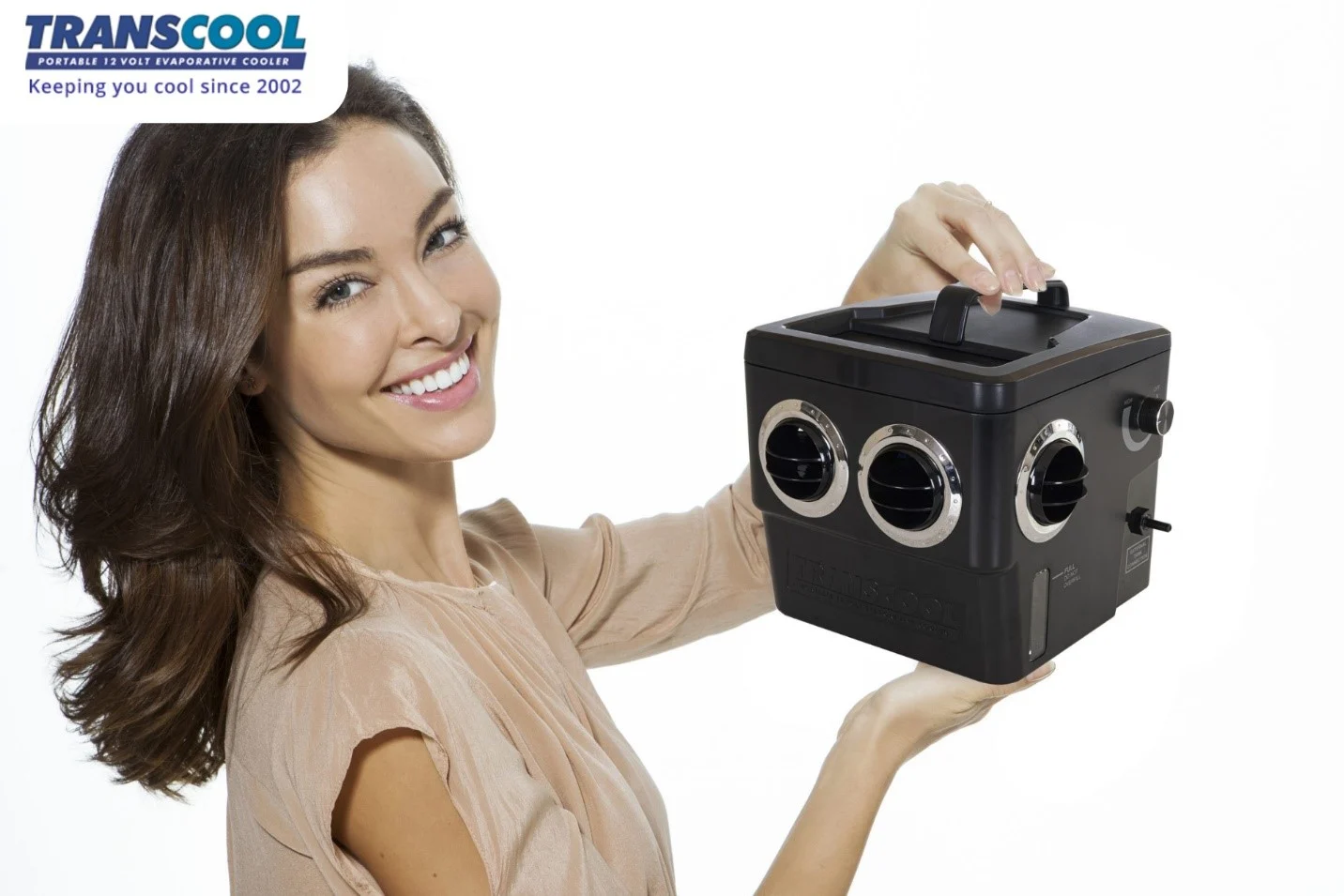
Why the Transcool E3 Is the Best 12 Volt Air Cooler for Camping

Camping today is not about struggling in the wild. It is about enjoying the trip and resting well wherever you go. Hot weather can make camping uncomfortable very quickly. This is the reason why many campers search for a good 12-volt air cooler. And this is where the Transcool E3 comes in and does its job well without creating any fuss.

It is not like many budget coolers that promise relief but struggle in real conditions. The Transcool E3 is built for people who actually camp and live outdoors. It concentrates on sensible cooling and low power use rather than flashy claims.

Built for Real Camping Conditions, Not Just Weekend Use

Many portable coolers are designed to look attractive but fall short once they leave the driveway. The Transcool E3 is designed and built in Australia with real outdoor conditions in mind. Dust and heat waves are everyday realities for campers. Campers also have limited power access. This is exactly why many experienced travelers consider it the best 12-volt air cooler for camping.

The E3 is easy to carry and move because it weighs under 2kg. You can hang it inside a camper trailer or swag. Its compact size signifies it does not compete with essential gear for space. It aligns perfectly with mobile setups where every centimetre matters instead of being bulky.

Cooling That Makes Sense Off-Grid

Camping often means depending on batteries or solar power. Power-hungry appliances can drain systems quickly. It leaves travelers without essentials. The Transcool E3 uses only 20 watts at maximum output. This makes it ideal for off-grid setups.

This low draw is one of the main reasons it is often described as the best 12-volt air cooler for camping. It allows users to stay cool through the night without worrying about waking up to a flat battery. The built-in low battery voltage cutouts add an extra layer of protection. This is especially valuable when running equipment overnight.

Comfort Without Damp Air or Condensation

A common concern with evaporative coolers is humidity. Many cheap models create damp air and uncomfortable sleeping conditions. The Transcool E3 avoids this issue by producing airflow without excess moisture.

This balance makes a real difference in closed spaces like tents and vehicle cabins. Users experience fresh airflow that helps regulate body temperature instead of sticky air. This sensible approach to cooling is another reason the E3 stands out as the best 12-volt air cooler for camping in warm climates.

Designed for Flexibility on the Road

Camping setups vary widely. Some people travel in caravans. Other vans or trucks. The Transcool E3 adapts easily to all of these environments. It supports both 12v and 24v systems. This allows use in different vehicles and battery configurations.

The internal 1.7 litre water tank provides up to eight hours of cooling. This makes it suitable for overnight use. The unit can still operate as a fan when water is not available. The complimentary 5L external water supply tank produces convenience without extra cost for extended trips.

This flexibility is exactly what campers look for when searching for the best 12-volt air cooler for camping.

Quiet Cooling That Helps You Sleep

Noise matters at night. Loud fans or rattling units can disrupt sleep in small spaces. The Transcool E3 is engineered to deliver airflow quietly. This allows campers to rest without constant background noise. 

Good sleep is not a luxury on the road. It directly affects safety and enjoyment. A cooler that helps regulate temperature without disturbing rest becomes an essential travel companion! Not just another gadget.

Built to Last, Not to Be Replaced Every Year

One of the important reasons the Transcool E3 costs more than entry-level coolers is durability. Many consumers report using their units for 15 to years. This kind of lifespan is rare in portable cooling equipment.

The E3 is supported by an Australia-based service and a two-year warranty rather than being disposable. The cost per year becomes surprisingly low when users calculate long-term value. This sound build is a big reason why many people trust it as a top 12-volt air cooler for camping.

Safe and Comfortable for Pets

Traveling with pets when you are camping signifies you have to think about their comfort, too. Dogs can get uncomfortable very quickly in hot weather in a small or closed space. The Transcool E3 helps by moving air smoothly! This helps keep pets cool without strong cold blasts.

Many pet owners prefer this cooler because it helps them relax during trips. Hot days feel much easier to manage when you know your dog can stay calm and comfortable inside a tent or vehicle.

Click here to read more related blogs.

Cooling That’s Better for the Environment

The Transcool E3 cools the air without using any harmful gases. It works on a basic water-based cooling method. This makes it a greener choice than normal AC units and suits campers who prefer off-grid living.

Saving power and reducing harm to nature is just as important as keeping themselves cool for many travellers. The E3 allows users to stay cool without compromising those values.

Why Campers Choose the Transcool E3 Over Cheaper Options

Budget coolers often attract attention with low prices. But you know what? They frequently disappoint in performance and durability. Many struggle with weak airflow or rapid failure.

The Transcool E3 focuses on reliability and real support. Campers are looking for something that works night after night when they search for the best 12-volt air cooler for camping. This is where the E3 earns its reputation.

Ideal Use Cases and Honest Expectations

The Transcool E3 is a personal spot cooler. It is made to cool sleeping areas and small enclosed spaces. It is not intended to cool entire rooms or replace household air conditioning.

Understanding what the product is designed to do ensures satisfaction. It delivers dependable comfort in situations where traditional cooling is not reasonable when used correctly.

A Smarter Investment for Long-Term Travel

Camping gear should support lifestyle! It shouldn’t complicate it. The Transcool E3 simplifies cooling by providing a reliable and low-power solution that adapts to different environments. Be it: Touring remote regions. Camping off-grid. Traveling with pets. It aligns perfectly with your setup.

The Transcool E3 is a preferred choice, not because of marketing promises. It is preferred because of real-world performance and long-term trust from users.

Final Thoughts

Comfort on the road is about smart choices. The Transcool E3 produces cooling where and when it matters most without draining power or creating discomfort. It continues to earn its place as the best 12-volt air cooler for camping with easy-to-use and designed for real campers specifications.
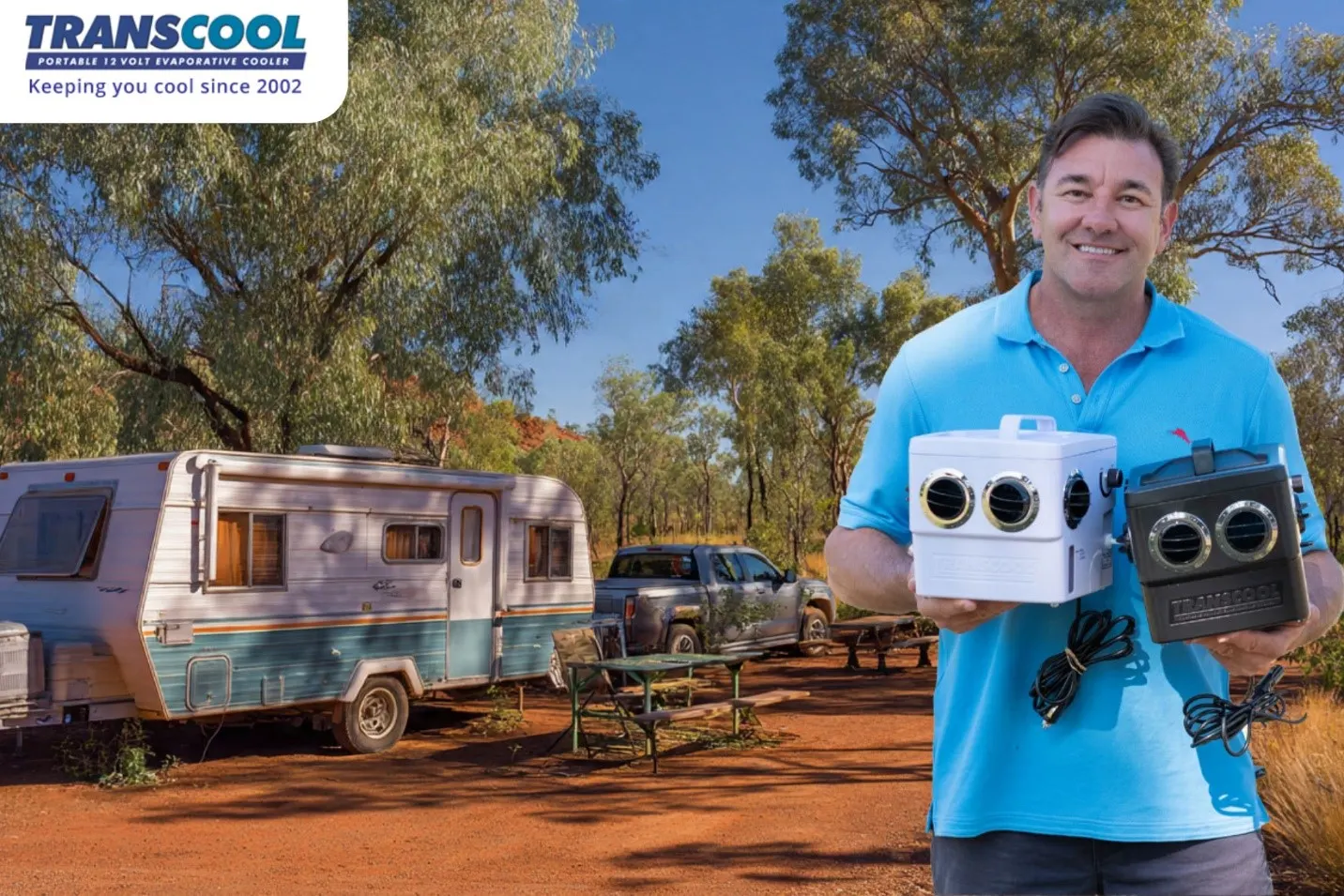
Choosing the Best 12 Volt Air Cooler for Camping: Transcool’s Practical Guide

Someone wants the best 12-volt air cooler for camping! What do they want? They are in need of a cooler that provides portability and actual power requirements. Campers and van-lifers need a solution that possesses these properties: Cools a small place easily without consuming a lot of battery. Capable of handling outdoor dust and heat. Swaps easily between vehicle and campsite power.

We at Transcool recommend models that combine efficient cooling with flexible inputs so you get reliable comfort whether you’re on the road or pitched at a powered site. A special advantage is multi-input capability: Many top units clearly state that they run on 12 or 24 Volt DC or 240V mains power. This eliminates difficulty and increases reliability.

Why multi-input power matters for camping

Your available power sources change when you camp: Sometimes you’re tethered to a car battery. Sometimes, you have access to campground mains. Choosing a cooler that runs on 12 or 24 Volt DC or 240V mains saves you from buying inverters or multiple adapters and minimizes conversion losses that shorten battery life.

This flexibility is generally useful for people who use a campervan or split time between mobile and stationary setups. A unit that supports both DC and AC inputs makes transitions smooth and maximizes the cooler’s utility across different trips.

Understanding cooling methods and how they perform outdoors

Every portable cooler doesn’t follow the same mechanism. Evaporative coolers cool by adding moisture and moving air: They are lightweight and energy efficient. But you know what? Their effectiveness drops in high humidity.

Compressor-based portable coolers act more like mini air conditioners and can reduce actual air temperatures even in humid environments: They tend to be heavier and draw more power.

The best 12-volt air cooler for camping depends on where you camp most: Choose an evaporative model for dry and hot climates. Do you frequently camp in humid or coastal regions? Choose an evaporative model for dry and hot climates.

Look for clear specifications: Airflow (CFM). Coverage area and realistic temperature drop estimates rather than marketing claims.

Power draw, battery planning and run-time

No one wants to drain their battery! But how to successfully achieve this? It is possible if you know how much power your cooler uses at 12V. A normal evaporative cooler that pulls around 3-5 amps will operate much longer on a normal leisure battery than a compressor-style cooler that requires 20-30 amps.

Some people want to use the cooler when the vehicle is off! Calculate operation time by dividing your battery amp-hours by the cooler’s amp draw and allow a safety margin to stay away from excessive depth of discharge.

Models that provide both 12 and 24V inputs can be more successful on 24V systems because they consume less current for the same output: The best benefit for larger vans and trucks.

Noise, size, and the portability trade-offs

Comfort at night is a lot more than temperature. The fan and compressor create a noise that can be irritating, especially if you’re sleeping in a small tent or van. The best 12-volt air cooler for camping will provide different fan speeds so you can cool quickly and then settle to a quiet mode for overnight use.

Size also plays a part: Larger units generally provide more airflow and longer water capacity (for evaporative types) but weigh more and require more storage space. Priorities compact and sound designs with secure handles and stable feet that work on uneven ground for true mobility.

Realistic expectations: spot cooling versus whole-room cooling

Portable 12-V coolers are made for spot cooling: A tent vestibule. A sleeping area. A small camper alcove. Not for conditioning an entire RV or cabin.

Expect improved comfort in a defined zone rather than a dramatic temperature drop across a large space. Match the mentioned coverage area to your setup and understand how airflow will be directed inside the tent or van when choosing a unit.

Strategic placement (near sleeping areas or workspaces) considerably improves perceived comfort.

Click here to see more related blogs

Installation, safety, and maintenance

Most units are ready-to-use: A cigarette lighter adapter. A clamp to the battery. A supplied mains cable. Use a fused connection and the proper cable gauge as suggested by the manufacturer to put a stop to voltage drop and overheating for semi-permanent installs in vans.

Regular maintenance keeps performance: Clean or replace evaporative pads. Empty and dry water tanks between uses. Keep vents free of dust and debris. Have you chosen the model that operates on 12 or 24 Volt DC or 240V mains power? Check that the manufacturer includes proper protection circuitry: Reverse polarity protection. Fusing. Surge protection. This helps to protect both the cooler and your vehicle’s electrical system.

Climate and environment: match the cooler to where you camp

Your camping environment should define the cooling technology you choose.

Arid regions: A simple evaporative cooler can improve comfort without using a lot of power.

Humid or tropical environments: A compressor-based cooler that will operate on 12 or 24 Volt DC or 240V mains power is a better fit, despite the higher power demand

Keep seasonal patterns in mind: Whether you frequently camp in shade or open sites. Also, how often you’ll use mains hook-ups versus battery power.

Value, warranty, and spare parts

The cheapest unit saves money initially. But you know what? It costs more over time in repairs and replacement parts. The best 120-volt air cooler for camping balances: Initial price with build quality. Warranty coverage and easy access to consumables such as pads and fuses.

Manufacturers who give clear wiring support and spare parts eliminate the risk of interruption when you’re on the road.

Final thoughts: choose the right cooler for your needs

The decision of choosing the best camper cooler completely depends on trade-offs. It is advised to choose a model that operates on 12 or 24 Volt DC or 240V mains power for excellent performance if you move between vehicles and campsites.

It is important to check the cooling method according to your climate. Size the battery and run-time sensibly. Go with the models that produce low noise and are very easy to maintain.

Transcool suggests evaluating your general trip profile and storage limitations before you choose one. The right cooler will make life outdoors easy without striking the balance between mobility and battery health! That’s the actual sense of portable cooling done well.